

Snapshot
This case study showcases
- Hybrid UX and UI way of working and self-directed research.
- Strong collaboration with developers and analysts.
- Turning business and user needs into solutions that work across teams.
- Product Design beyond screens: shaping internal tools, editorial operations, marketing capability, identity systems, new ideas and experiments at the same time.
Immediate’s reach:
21M
people per month
1.2M
total subscribers
About Immediate
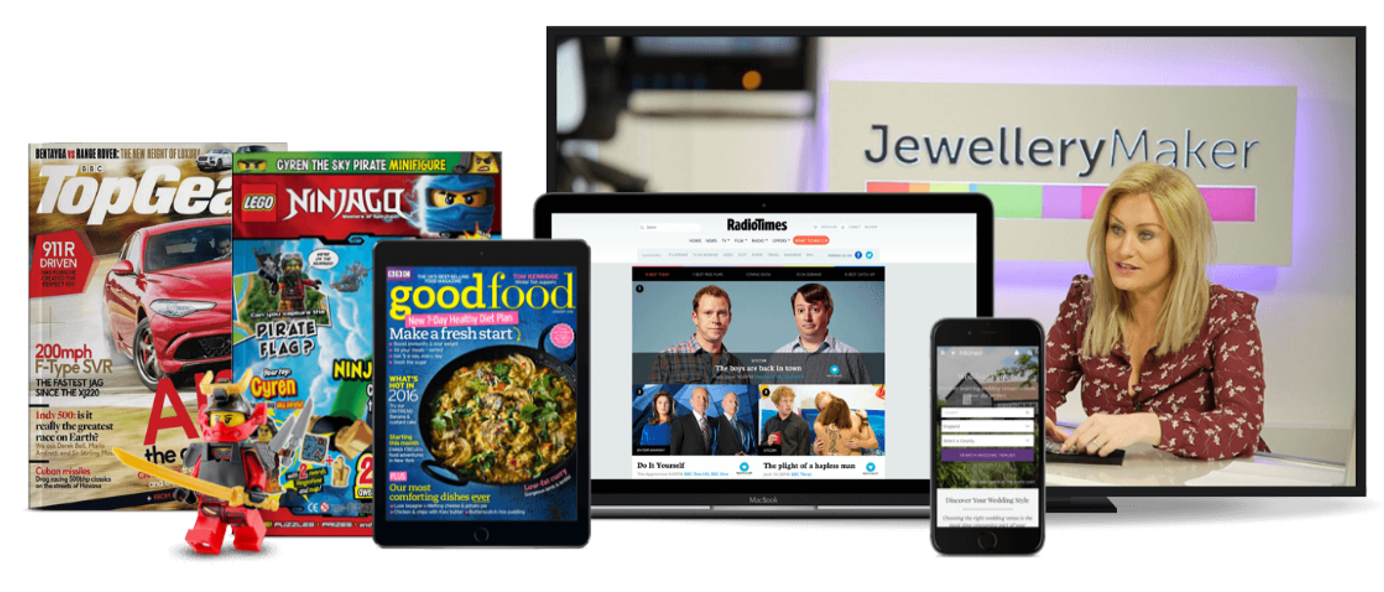
Immediate Media is a multi-platform publisher whose brands reach 21 million people every month, spanning iconic names like Radio Times, BBC Good Food, BBC HistoryExtra, BBC Gardeners’ World, Top Gear, Lego and Disney. Immediate serves 1.2 million subscribers across its products, to give a sense of the scale and commercial importance of the platform work behind the scenes.
Immediate's CMS platform
I delivered work within Fabric, Immediate Media’s proprietary platform for publishing and audience experiences across all brands. When I joined, Fabric was being transformed from a single monolithic application built around WordPress into a series of independent services following a headless architectural pattern. The shift significantly improved performance, automation, flexibility and control over the UI.
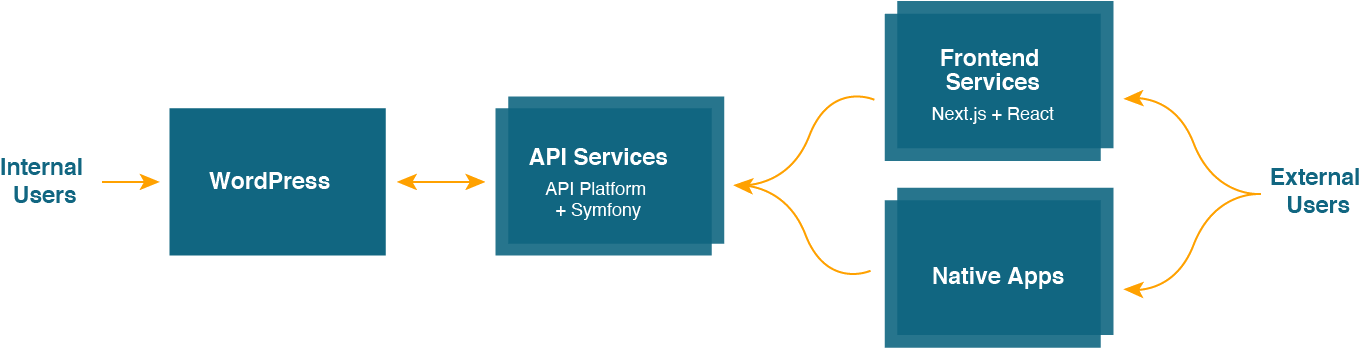
I designed editorial tools, identity journeys, subscription flows, new concept models and native/web app MVPs, while catering to both internal users (editors, marketers) and end customers (subscribers, website visitors).
Challenge and opportunity
Immediate was operating across a large portfolio of trusted brands, each with different audiences, content models and commercial goals.
The challenge was not simply to make individual screens better, but to create a coherent platform that could support multiple brands, empower editorial and marketing teams, grow subscriptions and monetise first-party relationships without eroding the trust that made those brands valuable in the first place.
The opportunity was to help Immediate move from fragmented, brand-by-brand experiences that required hands-on development and dedicated UX/UI customisation, toward more scalable and strategic product thinking.

Role and responsibilities
Initially interviewed as a UI Designer, then hired into a broader UX role by Immediate’s Head of Technology. The expectation for my role was to own the UX end-to-end, lead UI where needed, connect the dots between business goals, editorial realities and technical constraints.
How I worked
- Embedded in a scrum squad (Product Manager, Scrum Master and Engineers), and practising Agile day-to-day.
- Stakeholder workshops, co-creation, content and journey mapping sessions. Collaborating with editorial and marketing.
- Mixed-method research: moderated testing, behavioural analytics, online surveys and quick experiments. Collaborating with data, insights and digital advertising teams.
- System thinking over one-offs: every flow, component and pattern had to be reusable across brands.
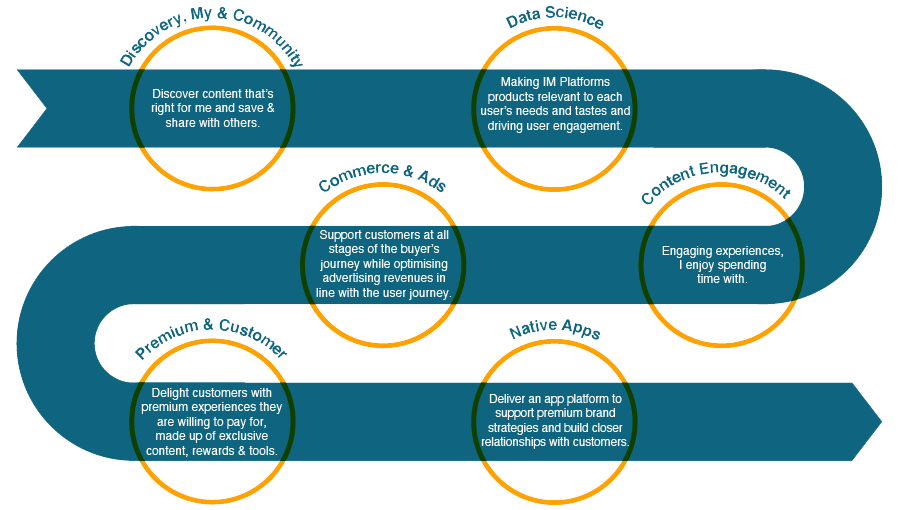
Approach
Commerce & Ads
As UX Design Lead of the ACT work stream, I was in charge of features that support the buyer’s journey & that increase ad revenues for the business, in line with the wider user journey.
Designing for editors and marketers
I focused on shaping CMS capabilities that allowed editors and marketing teams to update content, launch promotions and manage subscription-related changes with less dependency on developers. This gave teams more confidence and control while preserving experience consistency across brands.
Data-informed optimisation
Research and insight
Solutions
1. Evolok – new identity system
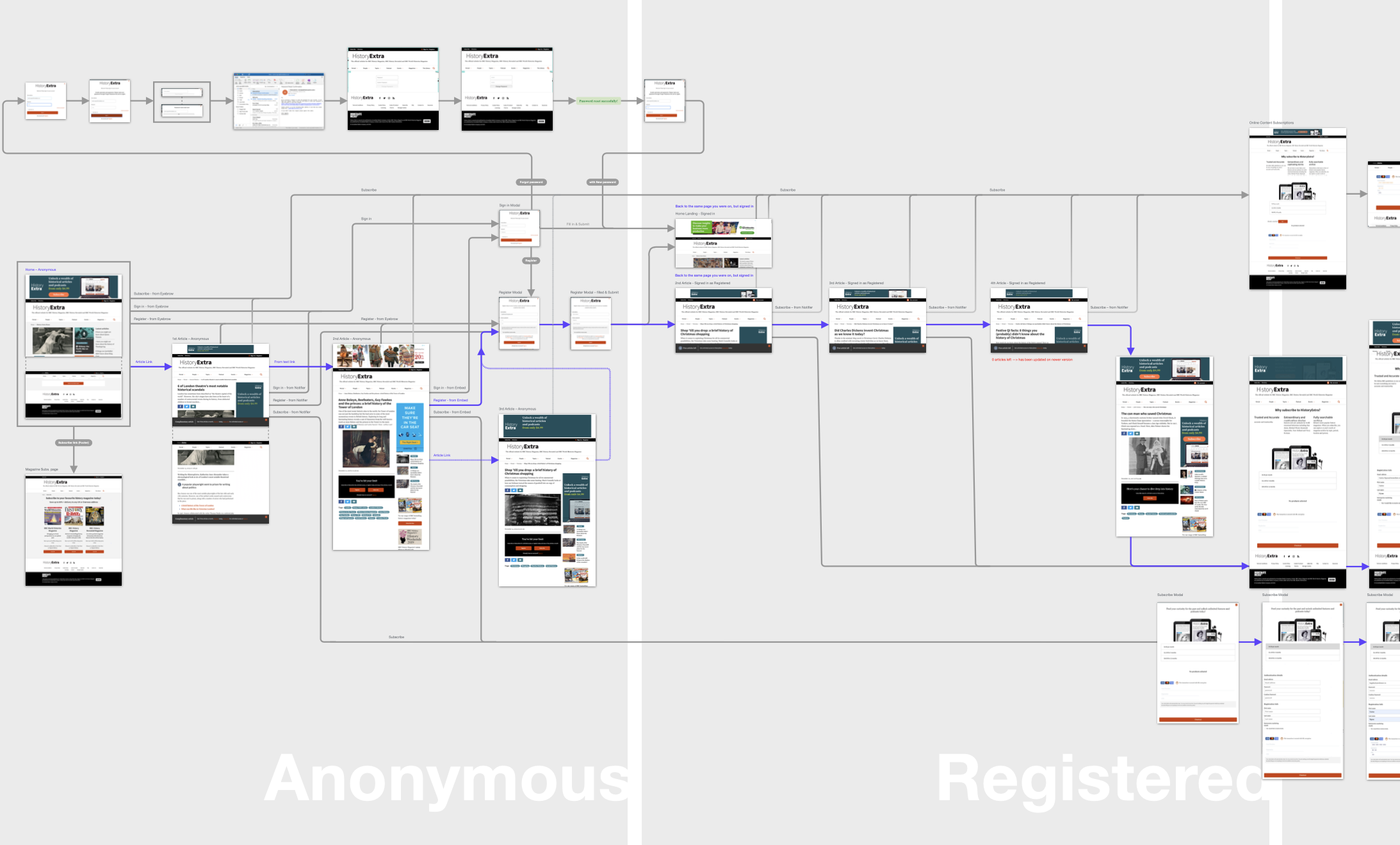
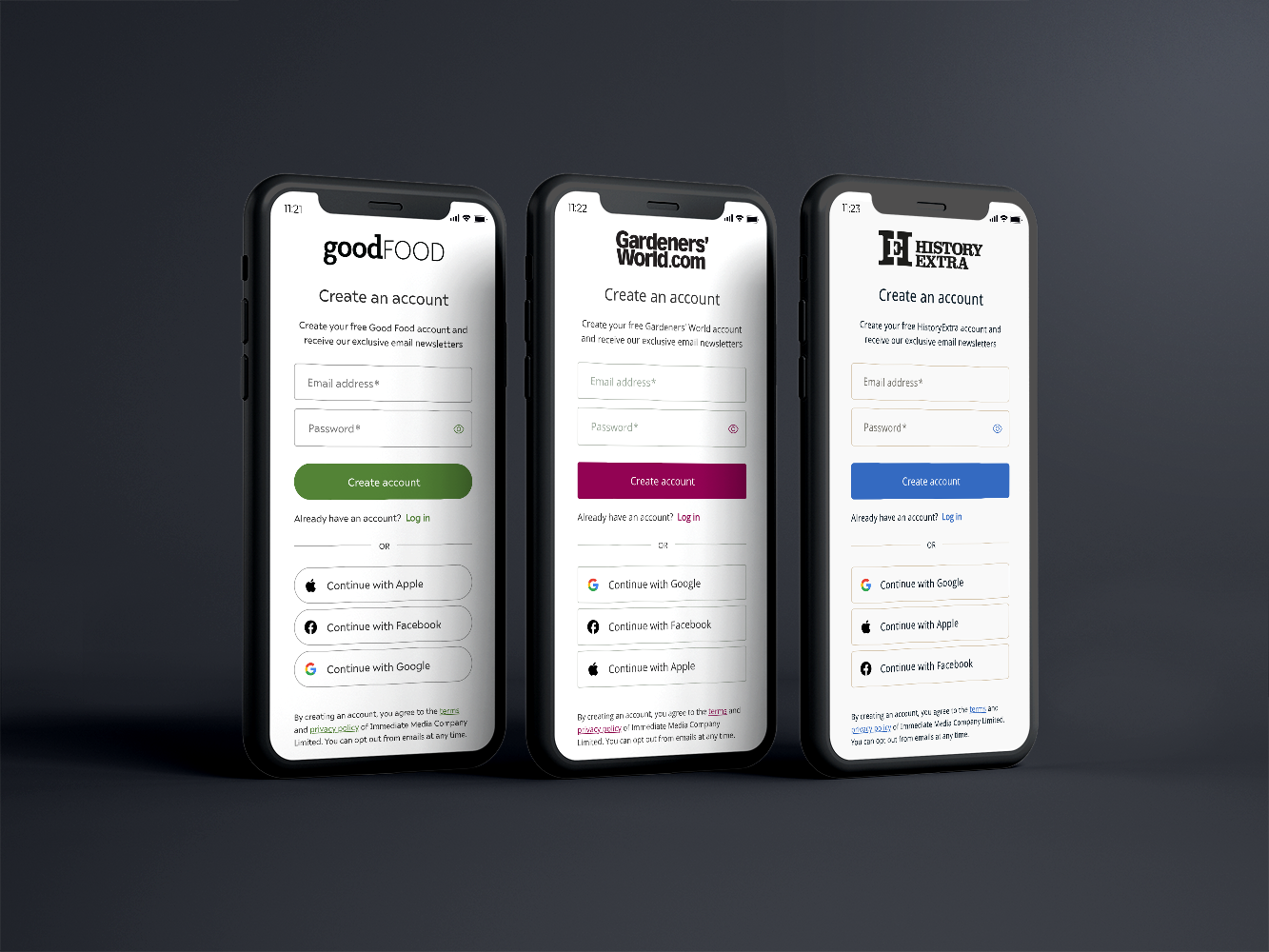
Immediate wanted to move away from handling identities entirely in-house. I was tasked with the adoption of Evolok platform / API as the new identity system for Fabric. Evolok handled identity, registration, access management, subscriptions and audience engagement, making it instrumental to IM’s ambition to scale first-party relationships and monetise capabilities.
I mapped and redesigned all the journeys: sign-up, sign-in, password reset, social sign-in, account preferences, and preference-setting. I improved messaging to help people better understand each step, reduce ambiguity, prevent avoidable errors and make account transitions feel trustworthy during a period of systems change.


2. BBC History Extra – subscriptions and paywalls
The work on identity and monetisation extended into subscription journey data- and pay-wall design for BBC HistoryExtra, ahead of its expansion in to the US market. I redesigned several parts of the experience:
- Metered messaging that set expectations early without being overwhelming: “3 free articles left this month”.
- Clearer value propositions on paywall overlays, tuned for new US audiences encountering the brand for the first time.
- UX audit of the entire subscription journey, backed by Hotjar heatmaps, to remove friction from “interested reader” to “paying subscriber” and to implement UX/UI improvements.
This included reusable patterns for: when to interrupt, how to frame the ask, and how to keep users oriented throughout.
3. BBC Single sign on – rapid prototyping and testing
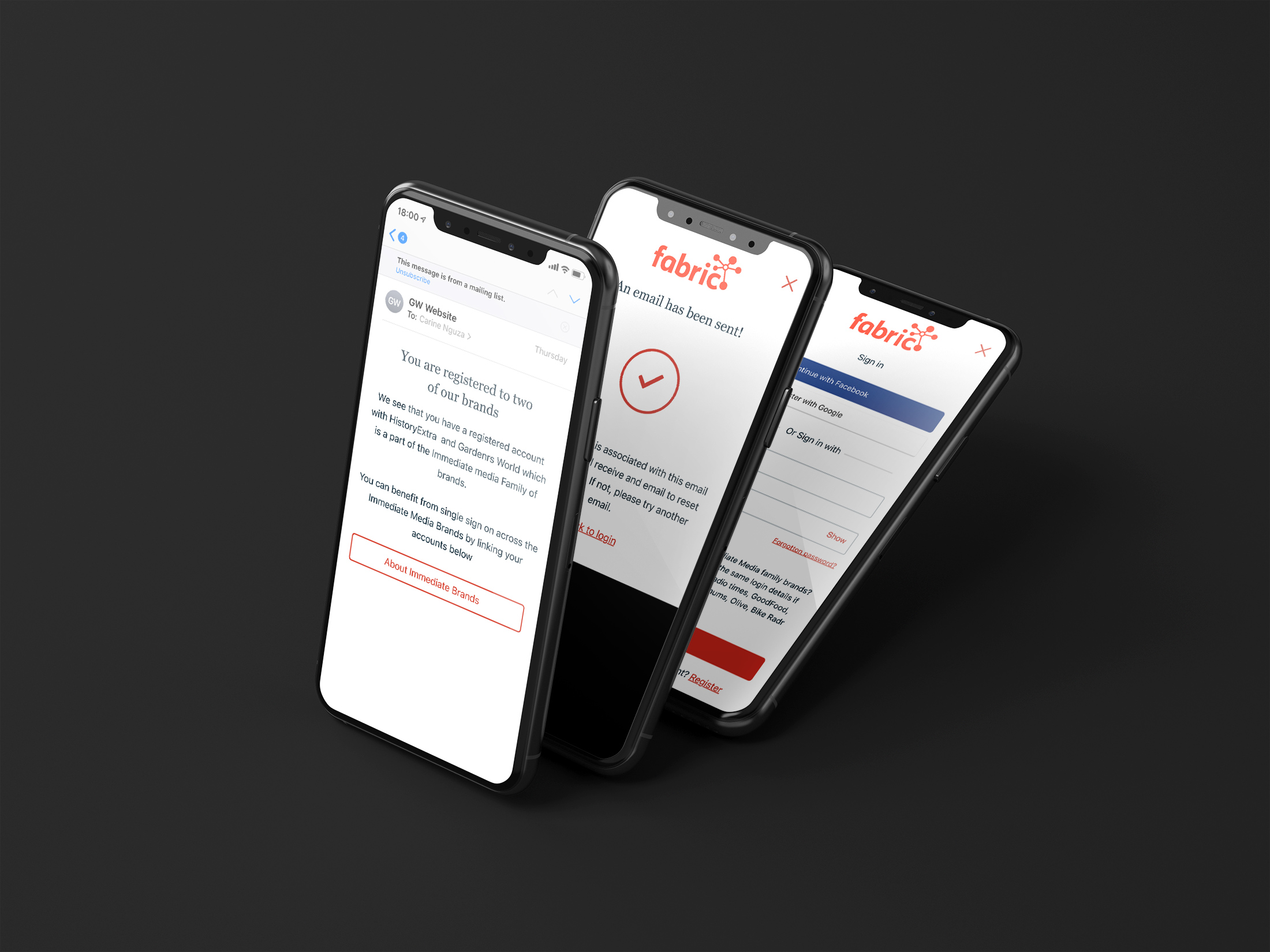
One of the most strategically interesting projects: I led a two-week spike, exploring single sign-on across Immediate’s BBC-branded properties. The business case was strong: a shared sign-in model could support first-party data strategy, cross-brand offers and more connected customer relationships across the portfolio.
I facilitated stakeholder workshops, defined flows, created prototypes and ran moderated remote testing with 12 participants, alongside a UI Designer + User Researcher (three amigos style).
The research revealed that although users liked convenience, many felt uneasy that separate brands “recognised” them without explicit consent. In other cases, households that share the same email login blurred the idea of ‘single individual’ activity being 100% accurate. The recommendation was to pause rather than push ahead — preserving trust instead of chasing a quick data win.
We proved enough risk around intrusiveness and customer esteem for BBC to pause launching the single sign-on feature. A good example of design adding value by helping the business avoid shipping the wrong thing, instead of blindly pushing a feature through.
4. BBC Gardeners World – app innovation and content repurposing
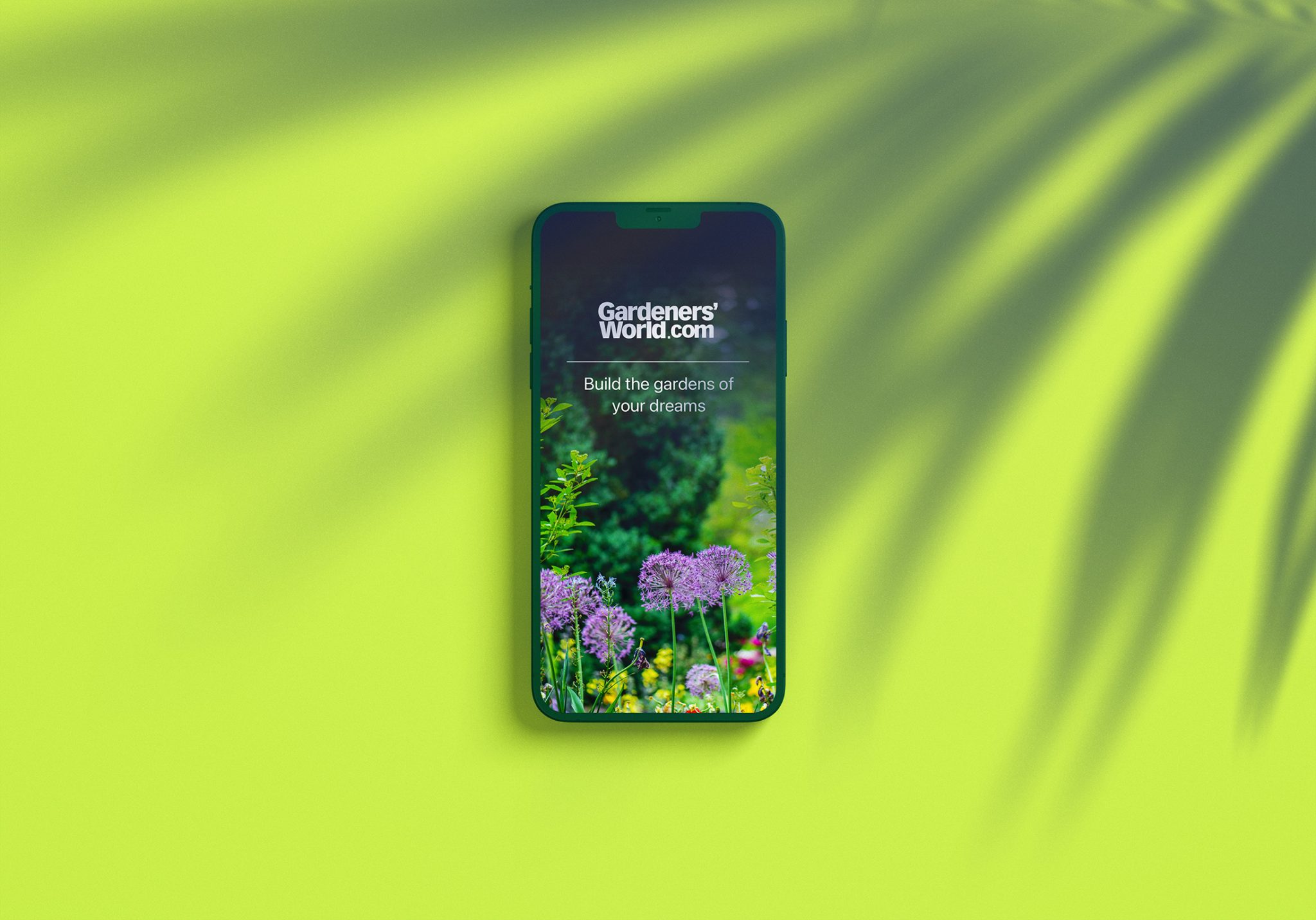
Beyond identity, I worked on new ideas and a minimum viable product (MVP) for the lovely folks at BBC Gardeners’ World:
- Developed concepts for MyGarden, reframing gardening content around personalised planning, tracking and seasonal tasks rather than static articles.
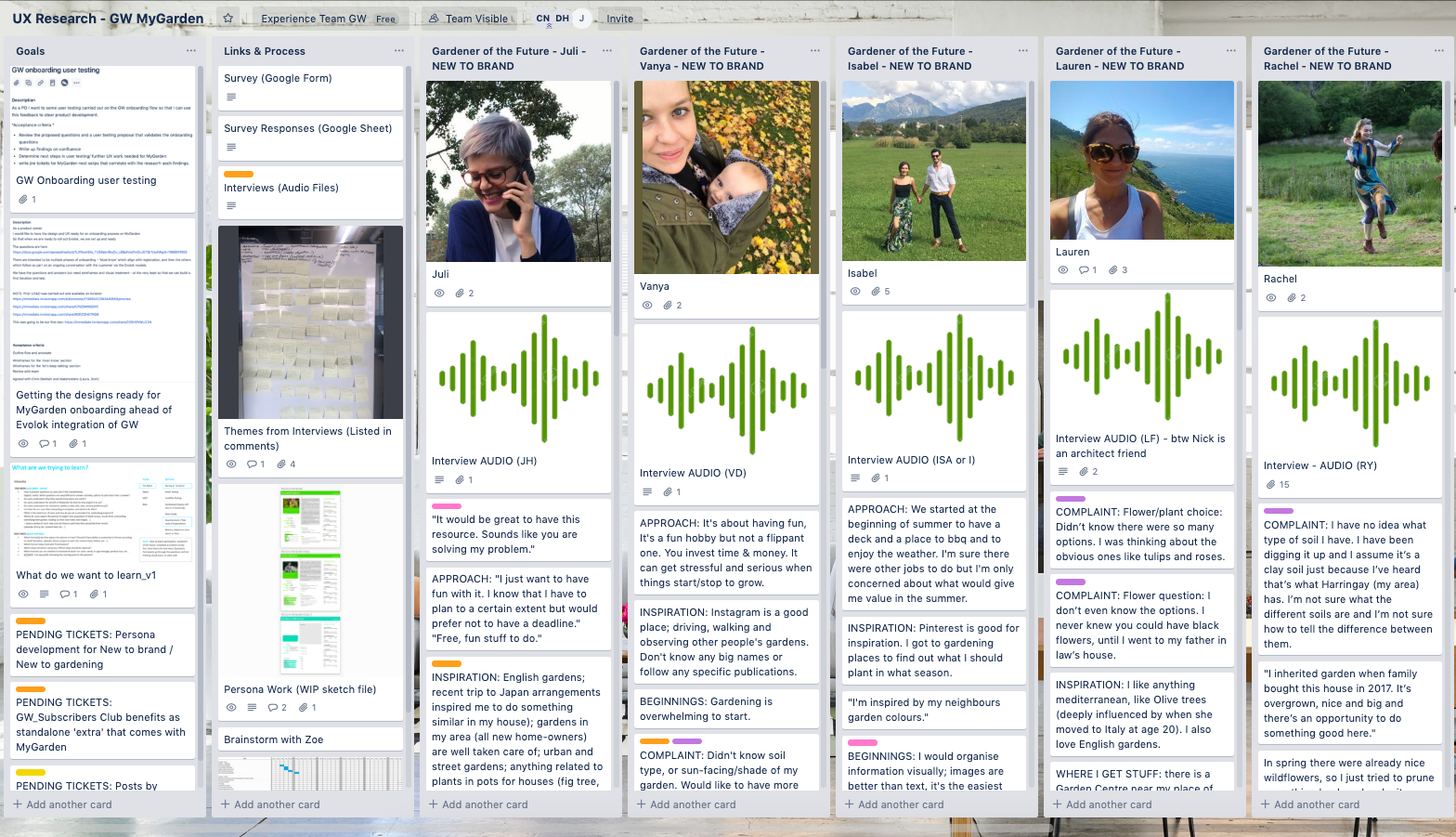
- Ran workshops to model how decades of evergreen content could feed into modern, dynamic, and data-enabled experiences.
- Prototyped and tested MyGarden’s on-boarding flow and navigation, to inform further decisions. Self-directed Guerilla Testing well appreciated by stakeholders.
- Reviewed existing apps on the market to decide whether Immediate should partner, acquire or build its own plant-identification tool. UX exploration x Product Strategy.

"Beginners seem so afraid to 'kill' their plants... Plants don't die, they just go back in to the ecosystem.Shouldn't let that get in the way."
21,000,000
people reached / month
37%
of UK adults / month
Outcomes
- Increased user acquisition across all brands
- Faster registration and login completion
- Higher marketing opt-in rates
- Better accessibility on all devices
Internal outcomes and impact
- Flexible CMS capabilities, reducing editors’ dependency on developers for changes.
- Clearer identity and account journeys during periods of platform transition.
- Configurable subscription and paywall patterns across brands and markets.
- Research as part of decision-making, not only for building things right but also for confirming we’re building the right thing.
Immediate reported more than 1.1 million active subscribers in 2020 and 1.2 million subscribers by 2026, alongside a reach of 21 million people per month – more than a third of UK adults. It is clear that the decisions we made supported meaningful business priorities, and were not just isolated design exercises.